PART OF THE HAUSE HOME NETWORKPRPTY × HAUSE · HOME INTELLIGENCE
HAUSE✳HomeAI HOME INTELLIGENCEAsk HomeAI
HOME PLAN / UNDERSTAND · RECORD · ACT

A clearer plan
for this home.

Bring observations, evidence and next questions together. Start with the system, keep the limits visible and choose the action that moves your understanding forward.

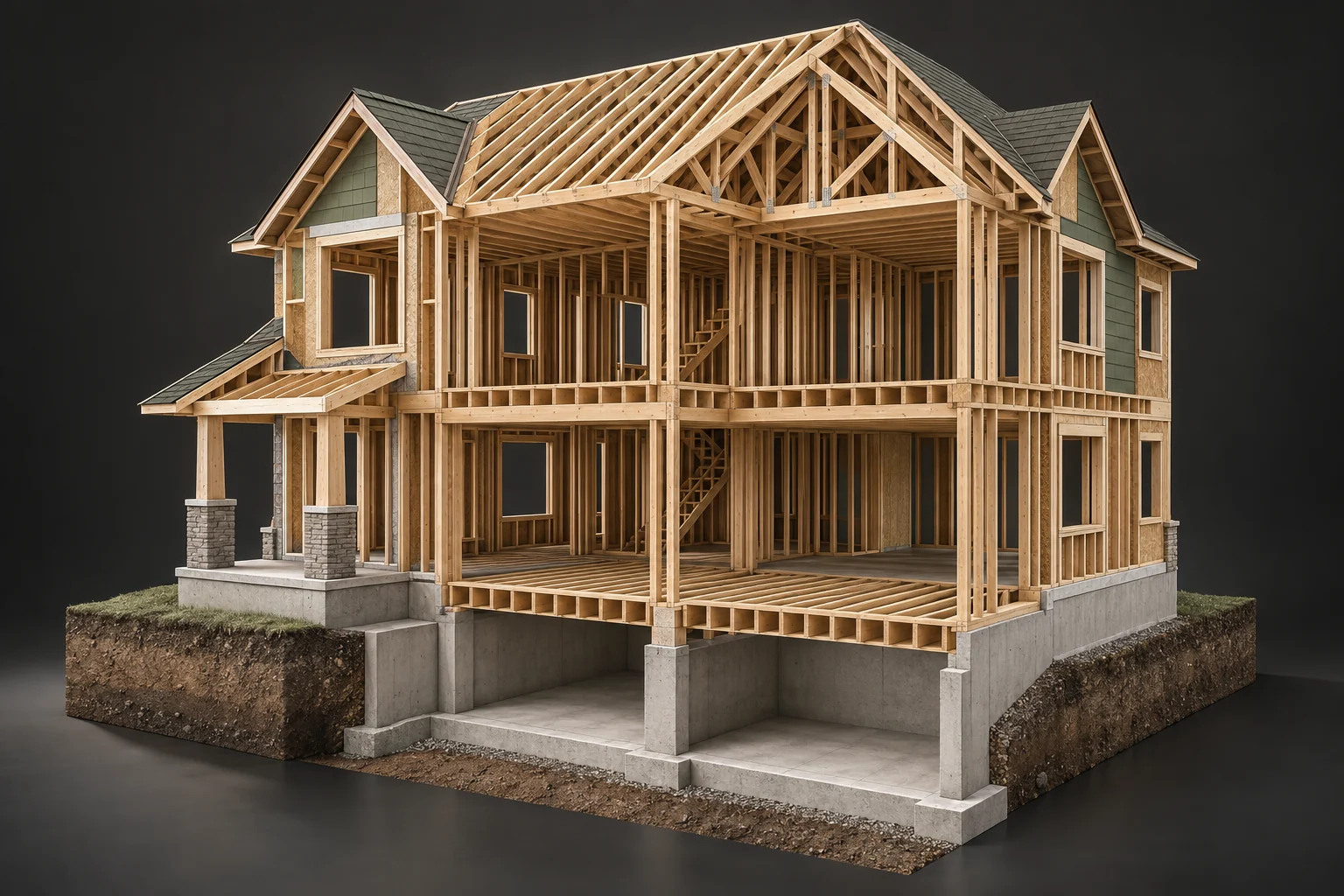
AI-generated conceptual timber house skeleton with open floors, roof framing and foundations
LOOK PAST THE FINISHESConceptual illustration · Real evidence still matters.
01 / STRUCTURE

Structure & alterations

Connect the present layout, recorded changes and the exact structural question. A visible crack or an open-plan room does not establish the load path.
Explore this in the atlas
AI-generated conceptual timber house skeleton exposing floor framing, roof framing, supports and foundations
The frame beneath the finishes. Connections, member sizes and load paths still need property-specific evidence.AI-generated conceptual illustration · Not an inspection or work instruction.
01 / FIND THE EVIDENCE

What supports the answer?

Available means you have a record to review. It does not establish condition, completeness or that the question is resolved.

Layout and supports

What evidence identifies the framing and supports relevant to this room or proposed change, and which portions remain concealed?

Useful record: Available drawings, a dated scoped report and photographs identifying their actual locations. A conceptual atlas image is not a drawing of this home.

Changes and their scope

Which walls, openings or substantial loads changed, and what records describe the proposed work and the work reportedly completed?

Useful record: Dated renovation plans, permit records, inspection results, invoices and documented revisions; retain gaps between proposal and completion.

The question assessed

Was the engagement an accessible condition review or an engineering assessment of a defined alteration, and what access, assumptions and exclusions did it use?

Useful record: The complete agreement and report, including the property reference, author, date, examined areas and limitations.

02 / NOTICE WITHOUT DIAGNOSING

Keep the observation useful.

Describe what you noticed and when. An unknown is a question, not a defect.

  • From ordinary accessible rooms, note the location and date of visible cracks, uneven surfaces or a reported change. Describe the observation without assigning a structural cause.
  • Use existing photographs and records to compare the same area over time. Record when a change was first noticed and any nearby work described to you.
  • Keep finishes, supports and framing intact. Do not enter roof spaces or concealed areas, add loads or remove a wall to resolve a planning question.
03 / CHOOSE THE NEXT ACTION

Move the question forward.

These are planning actions. A checked task records your action, not a verified system condition.

Owning: three useful actions

Buying: three useful actions

Selling: three useful actions

A new home: three useful actions

A BETTER SPECIALIST BRIEF

Ask for a defined deliverable.

Agree with the appropriate inspector or structural professional whether you need a condition review or assessment of a specific proposed change, including access, methods and exclusions.

What the scoped work can show

  • The members and supports actually examined, dated observations and the access limitations affecting those findings.
  • For an explicitly commissioned engineering assessment, the defined proposal, design assumptions and supporting analysis within that scope.
  • Which existing records support the assessment, which details need clarification and what further investigation is recommended for a stated reason.

What it cannot establish on its own

  • The condition of inaccessible connections, concealed members or soil without the evidence and methods needed to assess them.
  • A crack’s cause or the capacity of the whole structure from a photograph or appearance alone.
  • Suitability for every future load, alteration or use, or blanket compliance beyond the report’s actual scope.
02 / WATER & DRAINAGE

Drainage & buried services

Separate surface runoff, water entry and wastewater evidence. Timing and location help frame an investigation; they do not prove the route or cause.

Explore this in the atlas
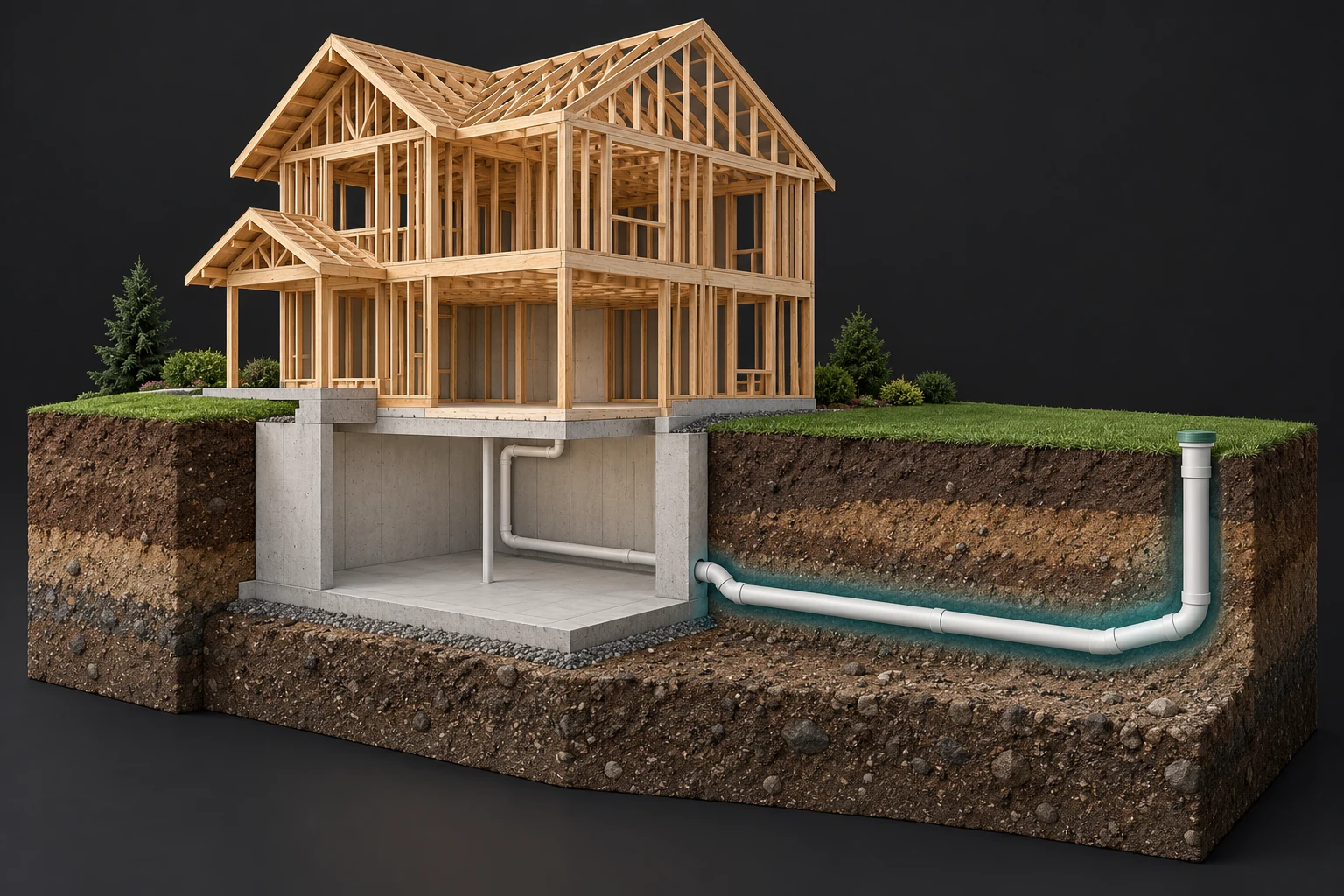
AI-generated conceptual house frame above a foundation and soil cutaway with a visible buried drainage route
A route made visible for learning. This picture establishes no pipe grade, cover, support, condition or ownership boundary.AI-generated conceptual illustration · Not an inspection or work instruction.
01 / FIND THE EVIDENCE

What supports the answer?

Available means you have a record to review. It does not establish condition, completeness or that the question is resolved.

Water and timing

What was noticed, where and when, and did it follow weather, fixture use or neither?

Useful record: Dated ground-level photographs, weather context and factual event notes; distinguish the visible water location from an unproven entry point.

Routes and work history

Which available records describe grading, drainage work and the wastewater connection, and how much of each route do they cover?

Useful record: Relevant plans, connection records and invoices stating their extent, plus repair dates and any local ownership or maintenance information.

Inspection extent

What length or area was assessed, which methods were used, and what visibility or access limitations remain?

Useful record: Complete footage and written interpretation for camera work, inspected endpoints and any separately supplied route, elevation or exterior assessment.

02 / NOTICE WITHOUT DIAGNOSING

Keep the observation useful.

Describe what you noticed and when. An unknown is a question, not a defect.

  • From safe ground-level access, record where runoff or pooling appears after ordinary weather. Avoid floodwater, unstable ground and changes to soil or outlets as an experiment.
  • Note which fixture use preceded a reported backup or leak without deliberately reproducing an overflow. Keep observation timing separate from a diagnosis.
  • Keep cleanouts, pits and service covers closed. Stay clear of contaminated water and water near electrical equipment; use the appropriate utility or emergency contact when immediate safety is involved.
03 / CHOOSE THE NEXT ACTION

Move the question forward.

These are planning actions. A checked task records your action, not a verified system condition.

Owning: three useful actions

Buying: three useful actions

Selling: three useful actions

A new home: three useful actions

A BETTER SPECIALIST BRIEF

Ask for a defined deliverable.

Choose the actual question first: surface drainage, water entry or a wastewater service. Agree the appropriate provider’s area, methods, access and written deliverable.

What the scoped work can show

  • An exterior assessment can document examined surface conditions and water-management details under the stated site and weather conditions.
  • A camera report can identify visible internal conditions along the accessible inspected segment, including obscured areas and the recorded endpoints.
  • If separately included, route or elevation measurements can describe their method, reference points, accuracy and limits; a repair proposal can define its intended extent.

What it cannot establish on its own

  • Every concealed drain, soil condition or external pipe support from ordinary interior video or a surface photograph.
  • The cause of visible deformation, responsibility for a repair or the entire pipe grade from ordinary footage alone.
  • Performance during every future storm, or insurer and warranty decisions from a technical inspection alone.
03 / ENVELOPE & ROOF

Envelope, roof & moisture

Connect the symptom to the assembly and its history. Rain control, air control, insulation and vapour control answer different questions.

Explore this in the atlas
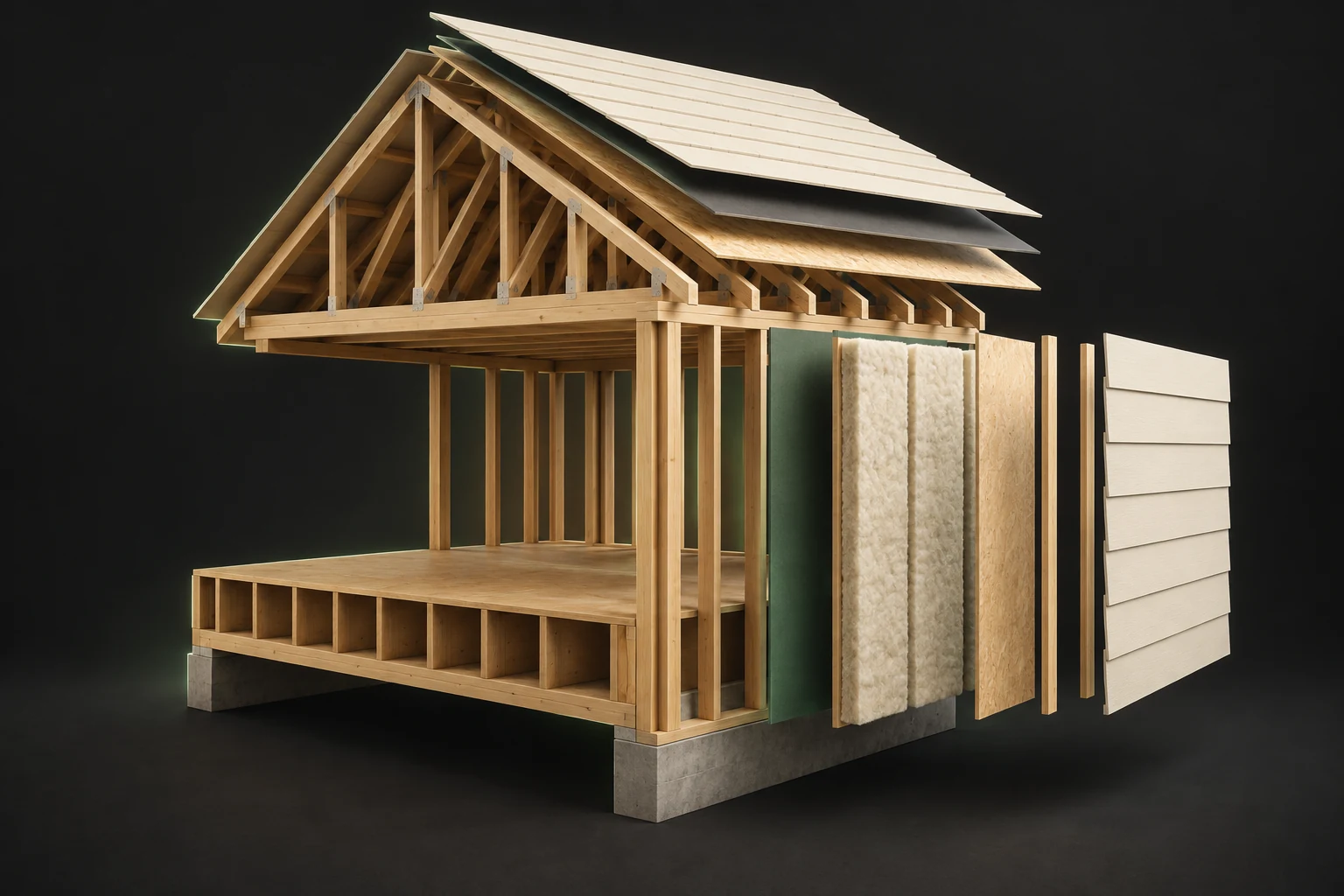
AI-generated exploded timber roof and wall corner with separated conceptual material layers
Separate layers, different functions. An illustration cannot establish the assembly, continuity or moisture condition in a real home.AI-generated conceptual illustration · Not an inspection or work instruction.
01 / FIND THE EVIDENCE

What supports the answer?

Available means you have a record to review. It does not establish condition, completeness or that the question is resolved.

Symptom location and conditions

Which surface or side of the glazing is affected, under what weather and room conditions, and how has the pattern changed?

Useful record: Dated observations, photographs and any room temperature, humidity or surface readings with the device and measurement location.

Assembly and work history

What do available roof, window, cladding and insulation records actually describe, including transitions and materials left in place?

Useful record: Product details, drawings, invoices and inspection records showing their scope; a replacement date alone does not describe the whole assembly.

Methods and inaccessible areas

Which assembly areas were examined, what measurements or openings were agreed, and which explanations remain unconfirmed?

Useful record: The complete assessment, photographs and measurement context, distinguishing room humidity from material moisture and observations from interpretation.

02 / NOTICE WITHOUT DIAGNOSING

Keep the observation useful.

Describe what you noticed and when. An unknown is a question, not a defect.

  • From accessible rooms, note the location and timing of condensation, stains or dampness, including whether water is room-side, between glazing panes or weather-linked.
  • Record room temperature and relative humidity if you have an appropriate device, following its instructions. Such readings describe room air, not moisture inside a wall.
  • Observe roof and exterior details from safe ground-level positions. Leave finishes intact and keep out of roof spaces or suspect materials to investigate an unknown.
03 / CHOOSE THE NEXT ACTION

Move the question forward.

These are planning actions. A checked task records your action, not a verified system condition.

Owning: three useful actions

Buying: three useful actions

Selling: three useful actions

A new home: three useful actions

A BETTER SPECIALIST BRIEF

Ask for a defined deliverable.

Give the envelope or moisture professional the exact symptom and work history. Agree the assemblies, access, measurement methods, possible openings and exclusions before the assessment.

What the scoped work can show

  • Examined assembly locations, observed conditions, available records and the access limits affecting the proposed explanation.
  • Measurements labelled by quantity, material or surface, method, location and conditions, with interpretation and instrument limitations.
  • A property-specific investigation or repair scope that identifies the suspected source, remaining uncertainty and any follow-up question.

What it cannot establish on its own

  • Concealed layer continuity, every flashing detail or hidden damage without the necessary access and evidence.
  • A whole assembly’s moisture content from room relative humidity, or a universal drying target independent of material and assessment method.
  • Mould species, a person’s health outcome, future watertightness or blanket compliance from a photograph or limited assessment.
04 / AIRFLOW & COMFORT

Airflow, comfort & controls

A cold room can involve supply volume, return paths, controls, heat loss or several together. Use comparable operating observations before choosing changes.

Explore this in the atlas
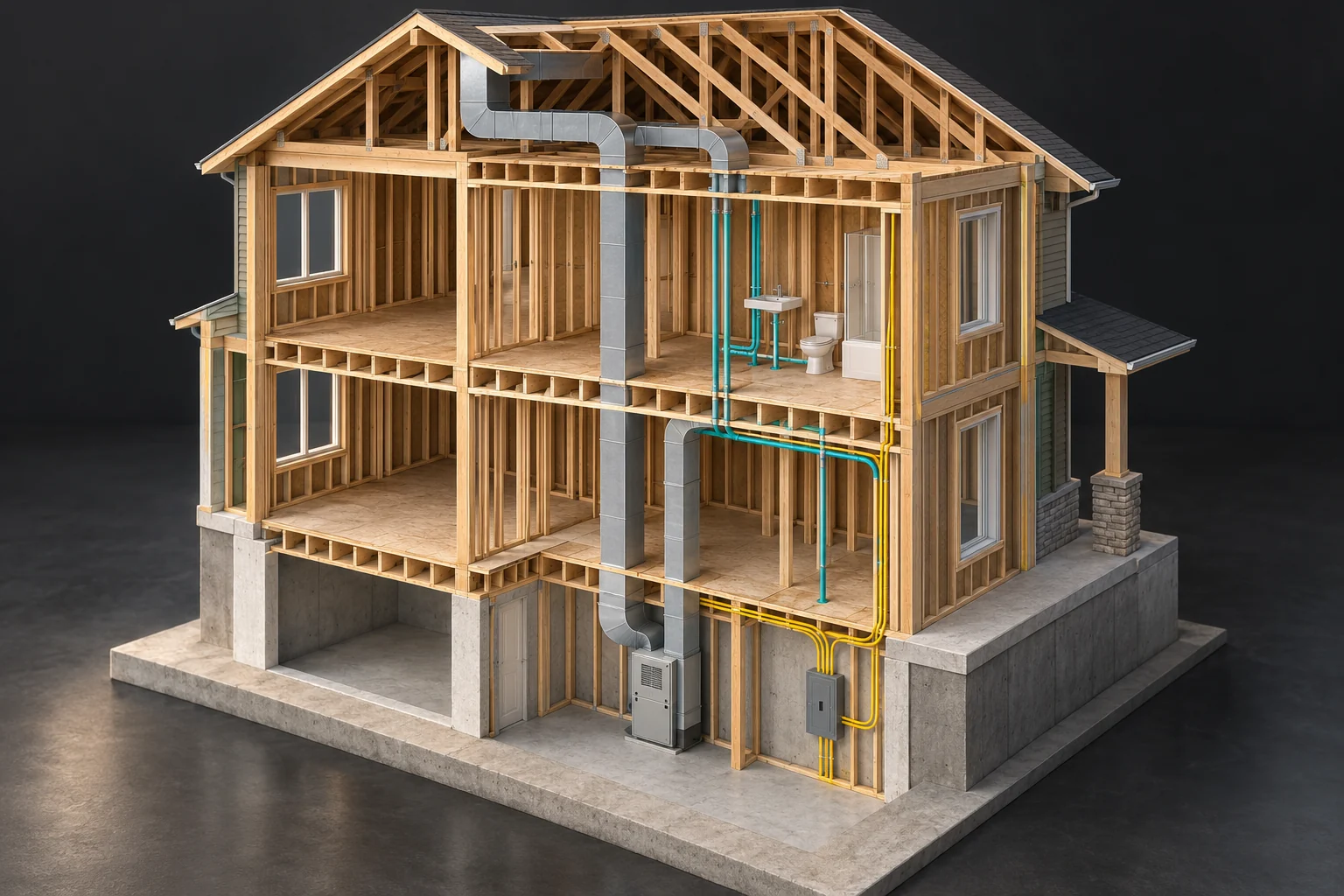
AI-generated conceptual timber house cutaway with visible ducts and other building service routes
A system picture, not a performance measurement. Actual airflow, return paths, heat loss and equipment settings need their own evidence.AI-generated conceptual illustration · Not an inspection or work instruction.
01 / FIND THE EVIDENCE

What supports the answer?

Available means you have a record to review. It does not establish condition, completeness or that the question is resolved.

Comfort and operating pattern

Which rooms are affected, in which mode and weather, and what changes with door position, thermostat setting or normal equipment runtime?

Useful record: Repeated room-temperature notes using the same measurement position, with outdoor conditions, mode and door context.

Equipment and configuration

What records identify the installed equipment, controls, filter requirements and service history?

Useful record: Model information, manuals, accessible control descriptions and dated service records matched to the equipment actually installed.

Measured delivery and scope

Which airflow, pressure, operating or heat-loss checks address this concern, and what did a commissioning or service report actually measure?

Useful record: A complete report with measurement locations, units, operating settings, dates, methods and stated limits.

02 / NOTICE WITHOUT DIAGNOSING

Keep the observation useful.

Describe what you noticed and when. An unknown is a question, not a defect.

  • Compare the same room-temperature location over several normal heating or cooling cycles. Note door position, weather, thermostat settings and observed equipment runtime.
  • Look for ordinary furniture or other obstructions at accessible grilles. Check an accessible filter only as the equipment manual directs, using its specified requirements.
  • Record visible error codes and where the thermostat senses temperature without opening equipment. Avoid smoke, incense or improvised pressure tests as airflow experiments.
03 / CHOOSE THE NEXT ACTION

Move the question forward.

These are planning actions. A checked task records your action, not a verified system condition.

Owning: three useful actions

Buying: three useful actions

Selling: three useful actions

A new home: three useful actions

A BETTER SPECIALIST BRIEF

Ask for a defined deliverable.

Ask the HVAC professional which competing explanations the proposed airflow, pressure, controls and heat-loss checks can distinguish, and agree the operating conditions and written results.

What the scoped work can show

  • Measured supply or return conditions at stated locations and equipment settings, if those checks are included.
  • The tested controls, equipment observations and room heat-loss assumptions relevant to the defined comfort concern.
  • Whether the results support a particular explanation, what remains uncertain and the scope of any recommended changes.

What it cannot establish on its own

  • A return-path restriction solely because the room warms when its door is open; that change remains an observation with competing explanations.
  • Delivered airflow or heating capacity by feeling a warm grille, or system balance from a conceptual atlas route.
  • Every seasonal operating condition, concealed duct condition or future comfort outcome from one visit or limited set of measurements.
05 / ELECTRICAL

Electrical evidence & readiness

Connect planned equipment, documented work and the actual electrical assessment. Empty panel positions do not establish spare service capacity.

Explore this in the atlas
AI-generated conceptual house services cutaway with electrical routes alongside ducts and water lines
Illustrated services do not establish wiring, protection, available capacity or safe working access.AI-generated conceptual illustration · Not an inspection or work instruction.
01 / FIND THE EVIDENCE

What supports the answer?

Available means you have a record to review. It does not establish condition, completeness or that the question is resolved.

Present and planned equipment

Which equipment is installed or proposed, and what supports any description of service capacity or circuit suitability?

Useful record: Equipment specifications and the relevant electrician or utility assessment; keep accessible labels separate from a verified load calculation.

Recorded installation changes

What dated records describe panel, circuit or equipment work, and which portions were actually included?

Useful record: Available permits, inspection results and invoices identifying the property, installation and completion scope.

Qualified review and limits

Did the electrician assess your specific planned loads and question, and what access or concealed details remain outside the report?

Useful record: The complete assessment, method and assumptions, with service or utility constraints and exclusions explicitly identified.

02 / NOTICE WITHOUT DIAGNOSING

Keep the observation useful.

Describe what you noticed and when. An unknown is a question, not a defect.

  • From normal accessible positions, note equipment names and exterior labels while keeping equipment covers closed and energized parts untouched.
  • Write down any reported trip, error or change with its timing and operating context. Do not repeatedly reset a device or operate circuits as a diagnostic experiment.
  • Heat, sparks, burning smells or repeated trips need qualified attention. Keep clear of the affected equipment and use emergency assistance when there is immediate danger.
03 / CHOOSE THE NEXT ACTION

Move the question forward.

These are planning actions. A checked task records your action, not a verified system condition.

Owning: three useful actions

Buying: three useful actions

Selling: three useful actions

A new home: three useful actions

A BETTER SPECIALIST BRIEF

Ask for a defined deliverable.

Give a qualified electrician the actual equipment list and intended changes. Agree the service, load, protection and condition questions included, with any utility involvement and access limits.

What the scoped work can show

  • The service and equipment information actually verified, and the assumptions and method of an included load assessment.
  • Observed condition and protection relevant to the examined circuits or equipment, with the extent of testing stated.
  • Requirements or unresolved questions for the proposed installation, including relevant utility, permit and specialist follow-up.

What it cannot establish on its own

  • Spare capacity from panel appearance or unused breaker positions alone, or suitability for unspecified future equipment.
  • Every concealed connection and circuit condition without the relevant access and methods.
  • Safety from one successful reset, a whole-home certification from one work record, or wiring standards from the atlas colours.
06 / SAFETY & INDOOR HEALTH

Indoor air, radon & safety records

Keep radon testing, ventilation, moisture investigation and CO safety separate. A clean-looking room or a conceptual airflow picture cannot measure exposure.

Explore this in the atlas
AI-generated conceptual house services cutaway used to discuss indoor safety questions
A services illustration cannot establish indoor air quality, alarm operation or a health condition.AI-generated conceptual illustration · Not an inspection or work instruction.
01 / FIND THE EVIDENCE

What supports the answer?

Available means you have a record to review. It does not establish condition, completeness or that the question is resolved.

Radon test context

Is there a representative long-term result with the device, location, dates, duration, heating-season coverage and interpretation recorded?

Useful record: The full test report and placement record. Current Health Canada guidance specifies at least 91 days; short readings do not establish the annual average.

Alarms and ventilation records

What identifies the installed CO alarms, fuel-burning equipment and ventilation systems, and which maintenance or commissioning records are available?

Useful record: Actual model instructions, dated service records and ventilation results; distinguish a device or maintenance record from a measurement of indoor exposure.

Moisture investigation scope

What moisture conditions were observed and investigated, which areas were accessed, and what source and follow-up conclusions does the report actually support?

Useful record: Dated observations and a complete moisture assessment with methods, examined areas, source findings, exclusions and any completion or follow-up evidence.

02 / NOTICE WITHOUT DIAGNOSING

Keep the observation useful.

Describe what you noticed and when. An unknown is a question, not a defect.

  • If a CO alarm sounds, leave immediately for fresh air and call 911 or emergency services from outside. Do not stay to complete the plan or locate the source.
  • For routine records, note accessible alarm and ventilation models and follow their manufacturer instructions for use and maintenance. The atlas illustrates routes, not pollutant levels.
  • Record ordinary dampness, visible marks and reported odours with location and timing. Avoid disturbing suspect growth or materials; testing and source questions need appropriate methods.
03 / CHOOSE THE NEXT ACTION

Move the question forward.

These are planning actions. A checked task records your action, not a verified system condition.

Owning: three useful actions

Buying: three useful actions

Selling: three useful actions

A new home: three useful actions

A BETTER SPECIALIST BRIEF

Ask for a defined deliverable.

Choose the specific question: representative radon measurement, ventilation performance or a moisture source. Agree the appropriate provider, protocol, locations, duration and report; medical concerns need a health professional.

What the scoped work can show

  • A radon report can state the measured average for its location and period, device and test conditions, and whether interpretation or retesting limitations apply.
  • An agreed ventilation assessment can document the examined system and measured operating conditions; a moisture assessment can identify observations and investigated sources within its scope.
  • The evidence behind recommended follow-up, its limits and any separately agreed post-work measurement or review.

What it cannot establish on its own

  • The annual radon average from a short reading, the condition of every room from one location, or future mitigation performance without relevant follow-up evidence.
  • Absence of all pollutants, a person’s health outcome or mould species from appearance, odour or a general inspection.
  • That a building is safe to re-enter after a CO alarm through this plan, an unrelated air-quality result or a chatbot response.
YOUR DEVICE / YOUR CHOICE

Keep a useful record.
Keep control of it.

The workspace runs in this browser. It has no account, cloud sync, automatic upload or contact request. Leave out personal information.

Saving to this browser is optional. Anyone using the same browser profile may be able to open the saved plan. A downloaded file is a separate copy that you control.

REVIEW BEFORE YOU SHARE

One useful question.
In your own words.

Review and edit the question. Continuing places this question in the chat below, where you can review it again. It does not send a message or leave your plan.

HomeAI can help explain mechanisms and prepare questions. It cannot inspect a property, certify condition or replace a qualified assessment.

A PLAN YOU CAN REVIEW

Your Home Plan brief.

A summary of what you entered, the evidence status you selected and the questions that remain. It is not an inspection report or verified condition assessment.

RESET THIS WORKSPACE

Start a fresh plan?

This clears your current HomeAI plan and removes only the HomeAI plan saved in this browser. It does not clear other browser storage or remove downloaded copies.

REVIEW THE LOCAL FILE

Replace your current plan?

Review the imported plan summary before replacing this page’s current plan. Import reads your selected file locally; it does not upload the file. Download your current plan first if you want to keep a separate copy.

YOUR PLAN / A BETTER QUESTION

Work through it with HomeAI.

Review a system question above, then choose when to send it here.

CONTEXT, NOT A DIAGNOSIS

Tell me about your home

Broad details help tailor the explanation. Keep addresses and personal information out.

Used for this page’s conversation only. Reloading clears these details.

Privacy & AI

Sending a question shares your text and broad home context with Cloudflare Workers AI to generate guidance. AI can make mistakes. Do not include personal, financial, medical or sensitive information.

The displayed conversation stays in this page’s memory and clears on reload or Clear. Cloudflare processes requests under its own policies. HomeAI uses daily codes derived from your IP address and request counts to limit abuse; it does not log chat text.

Team follow-up is separate. Contact details and any conversation you choose to share go to HAUSE’s lead systems and may be shared with a qualified provider where available, only with your agreement.

Read the full privacy explanation
A CLEARER HANDOFF

Bring the right details

HAUSE can review your request and, where available, introduce a qualified provider. This is an intake service; availability and response times are not guaranteed.

HAUSE reviews your request and helps with the appropriate professional conversation where available.